Words on Rope
The history of Shibari.
How a Japanese art of rope travelled from print, theatre and photography to studios around the world, including in Dubai and the UAE.
The words
Shibari and kinbaku.
Shibari comes from the Japanese verb shibaru, meaning “to tie” or “to bind.” In everyday Japanese, it can describe ordinary tying of any kind. Kinbaku means “tight binding,” and in Japan it is the term most often used for the art of rope on the body.
Outside Japan, Shibari has become the most widely used name for the practice as a whole. Some communities treat Shibari as the artistic term and kinbaku as the more intimate one, but this is a modern, largely Western distinction rather than a fixed rule in Japanese.
Roots
Rope in Japanese culture.
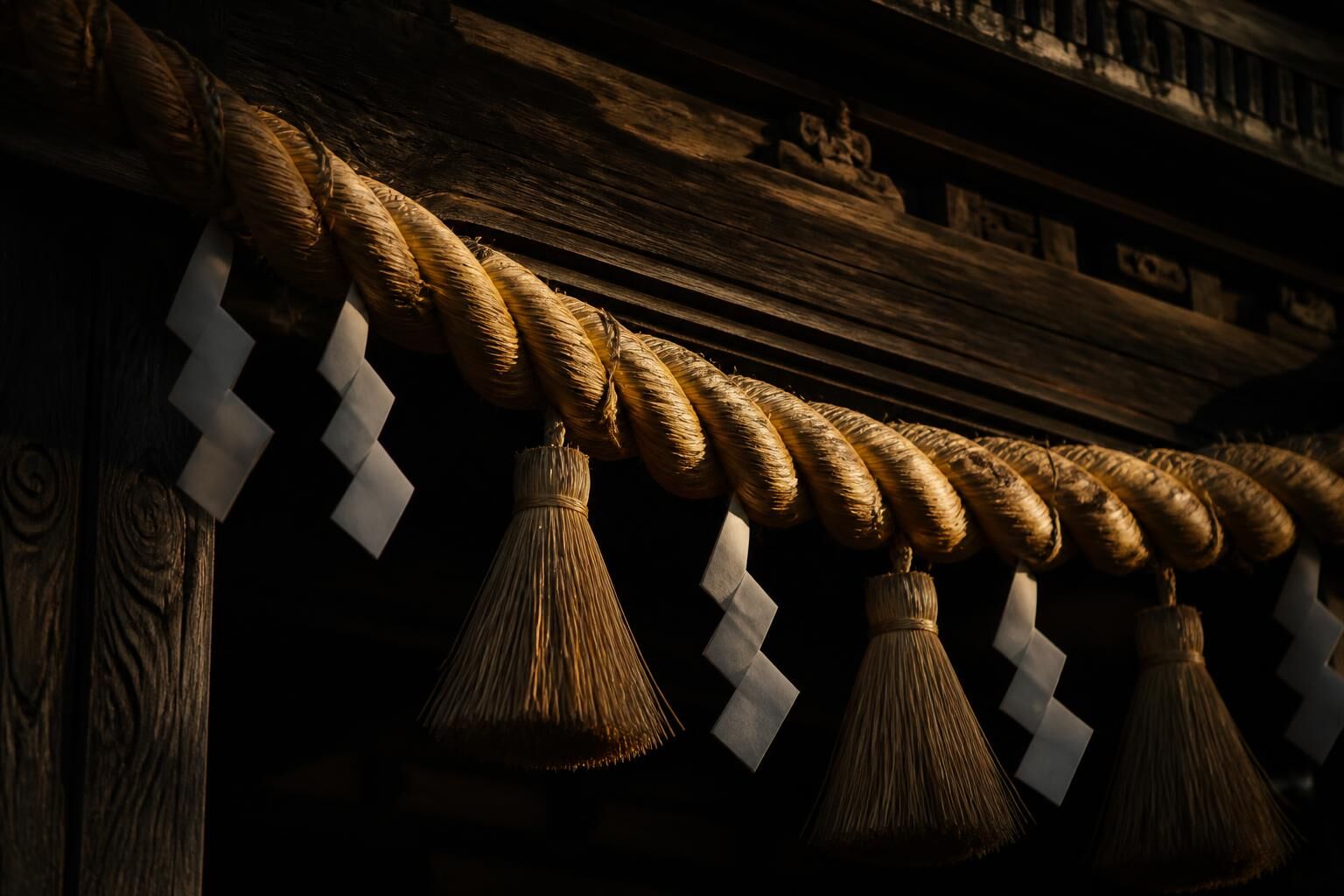
Rope has carried meaning in Japan for centuries, long before it became an art form. At Shinto shrines, sacred ropes known as shimenawa mark holy spaces and objects, a reminder that rope in Japanese culture has always been about more than holding things together.
Japan also had a martial tradition called hojōjutsu, used during the Edo period to restrain and transport prisoners. It established rope as a skilled, precise craft. It is often described as the ancestor of modern Shibari, but historians caution that this is an oversimplification. Hojōjutsu was a policing technique, not an art, and there is no unbroken line connecting the two.
An art form
Rope becomes art.
The artistic form of Shibari took shape much more recently, in the late nineteenth and early twentieth centuries, as rope began appearing in Japanese print culture, theatre and early photography.
The most widely recognised early figure is Seiu Ito (1882 to 1961), an artist who worked across painting, photography and staged imagery, and who helped transform rope from a practical tool into a subject of beauty and expression. Rather than being invented by one person at one moment, though, modern rope art grew out of many influences meeting and shaping one another.
Post-war Japan
A shared visual language.
After the Second World War, magazines and photography brought rope imagery to a much wider audience in Japan. Publications such as Kitan Club played a central role, helping to shape the visual style that Shibari is known for today, through illustration, photography and contributions from readers.
This part of the history includes erotic art and publishing, and it is important to acknowledge that honestly. But it also includes fine art photography, theatre and performance, and Shibari has continued to move between all of these worlds ever since.
Around the world
From Japan to the world.
From the late twentieth century, Shibari travelled beyond Japan through photography, translated books and magazines, travel, workshops and, eventually, the internet. Practitioners in Europe and North America began teaching and adapting it, and communities formed around the world.
Today, Shibari is practised in many overlapping ways: as art and performance, in photography, as a mindful and somatic practice, as a way for partners to build trust and connection, and as a shared community practice. These meanings are modern interpretations, and they sit alongside, rather than replace, the art’s more intimate history.
Clarity
Separating history from myth.
Because Shibari’s history is often retold loosely, a few popular claims are worth correcting.
Shibari is not an ancient samurai art unchanged for centuries. Its modern form is largely a twentieth century development, and the link to samurai restraint techniques is more story than fact.
Shibari and kinbaku do not have fixed, universal meanings. How the words are used varies between Japan and international communities, and has changed over time.
Rope in Japan is not only about bondage. Sacred, decorative and practical rope traditions came long before modern rope art.
Shibari is not simply “only art” or “only erotic.” Its history moves across art, photography, theatre and intimacy, and no single label captures it fully.
Today
Shibari in Dubai and the UAE.
Over the last decade, a growing community in Dubai, across the UAE and throughout the GCC has embraced Shibari as an art form, a mindful practice and a way of connecting. Like communities around the world, it continues to add its own chapter to a living, evolving art.
At Shibari ME, every journey begins with Shibari 101, where history meets practice through safe rope handling, clear communication and your first ties. Read more in What is Shibari? and Is Shibari safe?, explore our Shibari classes, or get in touch with any questions.