Words on Rope
Is Shibari safe?
An honest look at the risks, the warning signs, and why learning properly makes all the difference, whether you are in Japan, Europe, or even in Dubai, UAE.
Honesty
An honest answer.
Shibari is not risk free, and anyone who tells you otherwise is doing you a disservice. Rope applies pressure to the body, and pressure in the wrong place, for too long, can cause harm. But like climbing, diving or many martial arts, the risks are well understood, and with proper teaching, clear communication and care, they can be greatly reduced. Safety in Shibari is not an afterthought. It is part of the practice itself. And like those disciplines, the difference between a safe experience and a harmful one often comes down to one thing: whether you took the time to learn properly.
The risks
Understanding the risks.
Nerve compression is the most important risk to understand. Several nerves run close to the surface of the skin, particularly in the upper arms, wrists and legs. Rope placed over them, or pulled too tight, can cause tingling, numbness or weakness, and in rare cases injury that takes weeks or months to heal. Knowing where these areas are, and how to avoid them, is one of the first things a qualified teacher will show you.
Circulation can also be affected. Rope that is too tight, or a position held for too long, can restrict blood flow, leading to coldness, discolouration or discomfort.
Positions and strain matter too. Some positions place stress on the shoulders, back or joints, especially when held for extended periods or when a person is not warmed up.
Falls become a consideration when balance is limited, which is why more advanced forms of rope, such as suspension, require additional training and experience. Suspension in particular should never be attempted without extensive, in-person instruction.
None of these risks are obvious to a beginner. That is exactly why education matters: you cannot avoid a danger you do not know exists.
Warning signs
Recognising the warning signs.
Part of learning Shibari is learning to notice what the body is saying. Common warning signs include tingling or pins and needles, numbness, a loss of grip strength, cold or discoloured hands or feet, sharp or unusual pain, dizziness or feeling faint.
If any of these appear, the rope comes off. Not later, not after one more tie, but straight away. A good practitioner treats these signals as information, never as something to push through. Reading these signs and understanding your body well takes practice, but there are tips and tricks that you can learn to mitigate the risks.
Consent
Communication and consent.
In Shibari, safety and consent are inseparable. Before any rope is used, partners talk openly about boundaries, health considerations and what each person hopes to experience. During a session, check-ins are constant, and either person can pause or stop at any time, for any reason, without needing to explain.
Clear communication also makes Shibari more rewarding. When both people trust that they will be heard, they can relax, be present and enjoy the experience fully. Good classes teach not only how to tie, but how to talk: how to ask, how to listen, and how to respond, both verbally and nonverbally.
Care
Practical care.
Responsible practice includes a few simple habits:
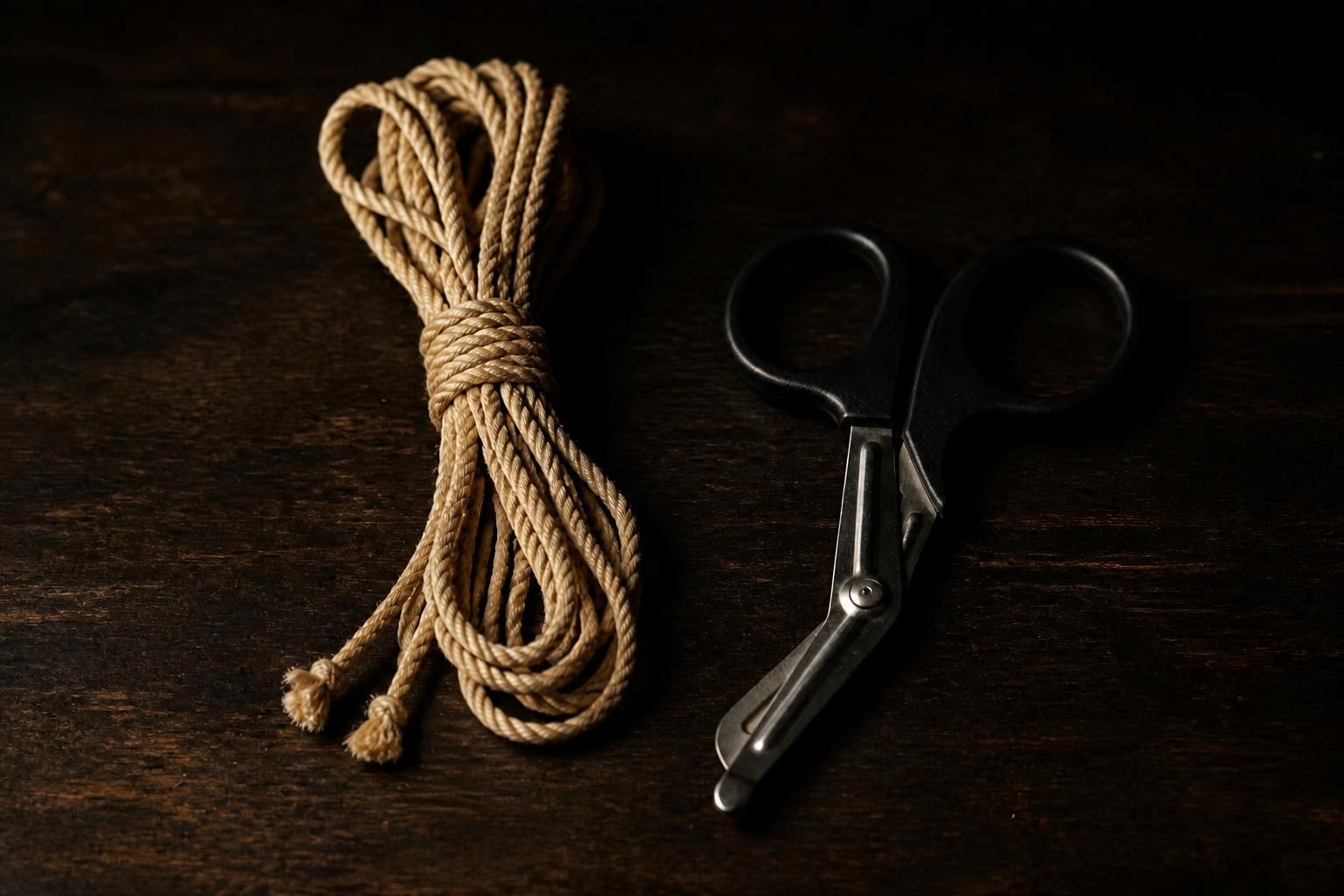
Safety shears within reach, so rope can be removed quickly if needed.
Never leaving a tied person alone, even for a moment.
No rope around the neck, ever.
Sharing health information, such as past injuries, joint problems or conditions that affect circulation or nerves. If you have any health concerns, speak with your doctor before you begin.
Starting simply, and building experience gradually before progressing to more demanding ties.
These habits are a starting point, not a substitute for proper training. A list can remind you what to do; only practice under guidance teaches you how.
Education
Why you should learn from a teacher.
Videos and photographs can inspire, but they cannot teach you how rope feels, how to read a body, or how to respond when something is not right. Learning from in-person classes and workshops gives you hands-on guidance, immediate feedback and a clear understanding of the risks from the very beginning, along with the wider knowledge around each technique, such as variations and alternatives for when something isn’t working for you.
In the GCC, including Dubai, UAE, where finding reliable Shibari guidance can be difficult, learning from an established, safety-focused community matters even more.
Educating yourself is an ongoing commitment. Even experienced practitioners continue to take classes, refresh their safety knowledge and learn from others. The more you understand, the more freely and confidently you can enjoy the practice. It is a growing, living art that continues to change as more people share and express their own ways of practising it safely and consensually.
Begin
Learning safely at Shibari ME.
At Shibari ME, safety is where every journey begins. Our Shibari 101 workshop covers safe rope handling, communication, and how to recognise the early signs of a possible injury before it happens. Every session is guided by an experienced facilitator, in a welcoming and discreet setting in Dubai and across the UAE and the GCC.
Whether you are completely new to rope or have been tying on your own, a foundations class is the safest and most rewarding place to start.
Explore our Shibari classes, read our FAQ, or get in touch with any questions.